
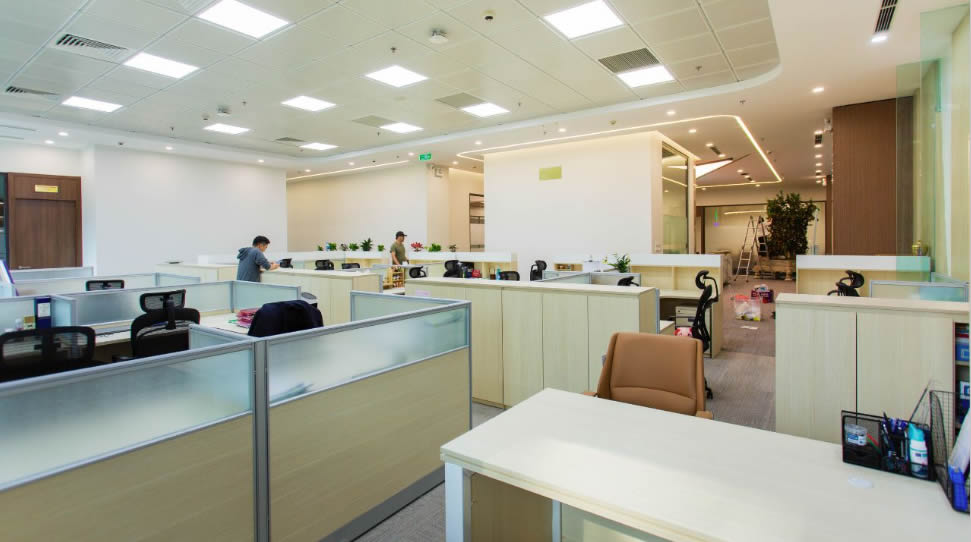
7 Ways to Make Better Use of Your Workplace
An organised workplace is not just about tidiness, it encourages employees to concentrate, fosters better collaboration and makes daily operations more convenient. Even a small office or expanding business can realize significant improvements in productivity and employee morale by utilizing the space that they have available. That’s why office space planning is now an important factor when businesses want to optimize their existing space but don’t necessarily want to relocate to a bigger building. Even a small work environment can be more efficient, comfortable, and flexible with a bit of clever thinking.
1. Assess How Your Space Is Being Used
To begin, get up close and personal with your workplace in order to understand how it works on a typical workday before making any changes. Look at the areas that are used again and again, how desks are left, and the efficiency of the meeting rooms.
You might find that some activities don’t need to be in certain spaces or that employees are spending a lot of time in spaces that are not designed for collaborative activities. Feedback from your employees can also uncover issues, including not enough space to store things, loud workstations, or no private space.
Knowing what people are currently using, and how they are using it, is a great starting point for improving the space to truly meet the needs of the people using it on a regular basis.
2. Create Zones for Different Activities
In a modern workplace, no single workplace is used for all tasks. Throughout the day, employees can be involved in focused work, meetings, brainstorming, phone calls and casual discussions.
Creating distinct work areas can aid these various activities. For example:
- Zones for quiet work and concentration
- Team meeting areas
- Accessible break-out spaces for short breaks
- Comfortable meeting spaces for discreet meetings
Zones are clearly defined to help eliminate the distraction and to facilitate the worker to select the most appropriate environment for the activity he/she is performing.
3. Make Better Use of Vertical Space
A lot of workplaces look at how much floor space they can accommodate and don’t consider how much space they can save above the level of their desks.
Wall mounted shelving, cabinets and storage units can help maintain workstations while saving on the floor space. In smaller offices where space is precious, vertical storage can prove to be particularly beneficial.
Notice boards, mounted organisers and overhead shelving are easy additions that can minimise clutter and make items that are used regularly easily accessible.
4. Invest in Flexible Furniture
Businesses can evolve rapidly as they expand or change to new working methods. It is easier to change furniture to suit a particular purpose with flexible furniture, without having to do expensive redecoration.
You can try using:
- Height-adjustable desks
- Modular seating
- Folding tables
- Mobile storage units
- Stackable chairs
Movable furniture enables the office space to be flexible enough to accommodate various functions throughout the day, including training sessions, group workshops, meetings with clients, and more.
This flexibility also allows businesses to plan for future expansion without pre-committing to permanent layouts for too soon.
5. Improve Storage and Reduce Clutter
Even if you have a large office, if it’s not organized, it can feel cramped. Too many pages, unused machinery and cluttered storage spaces can be crippling.
Frequently checking what to save can help you free up space. Consider:
- Digitising older documents
- Removing outdated equipment
- Using labelled storage systems
- Having individual lockers for staff.
- Cable Management Solutions: Introduction
A tidy workplace enhances the overall ambiance and efficiency, making it easier for workers to locate the necessary tools and equipment.
6. Prioritise Employee Comfort
It’s not just about maximizing space by packing additional desks into workplaces. The well-being of employees must always be on the agenda.
Lighting, ventilation, temperature and noise all have an impact on comfort and productivity.
Some improvements that can be achieved practically are:
- Maximising natural light
- Adding indoor plants
- Improving acoustic control
- Providing ergonomic chairs
- Developing comfortable break areas
Workplaces which promote employee wellbeing can be contributing to concentration, morale and retention.
7. Review and Adapt Your Layout Regularly
Business requirements change very little over time. Teams expand, departments shift, technology advances and hybrid working continues to impact office requirements.
Don’t consider workplace design as merely a project—to be done once and forever—plan for regular reviews to assess the effectiveness of the space in helping your business succeed.
Ask questions such as:
- Are meeting rooms being used effectively?
- Are quiet working spaces available for staff?
- Are there problems with storage, and are the current demands being met?
- Is hybrid the new normal for desks?
- Is there scope to enhance collaboration?
Making small changes over time will more often be cheaper than waiting for big changes to be needed.
Final Thoughts
It doesn’t always take a big office or a costly refurbishment to build a workplace that fosters productivity. Businesses can make your space more efficient by knowing how your employees use it, eliminating superfluous clutter, purchasing flexible furniture, and auditing the layout regularly.
For larger projects, collaborating with specialists who have a deep understanding of Office fit out London projects can make a difference, ensuring your ideas become a reality, functional and comfortable for your employees, and suitable for your business’s future requirements. Good planning of the workplace is an investment which can be used as an organisation evolves and grows.