
The Overlooked Shower Door Seal Check Every UK Landlord and Tenant Should Know
When moving into a rented home, most people check the heating, locks, windows and water pressure. The bathroom gets a quick look too: clean tiles, working shower, no cracked mirror.
But one small detail is often missed: the clear strip along the edge of the shower door.
Many tenants do not know what it is called. Many landlords only notice it when the bathroom starts showing small problems. That part is the shower door seal.
Why Shower Door Seals Matter
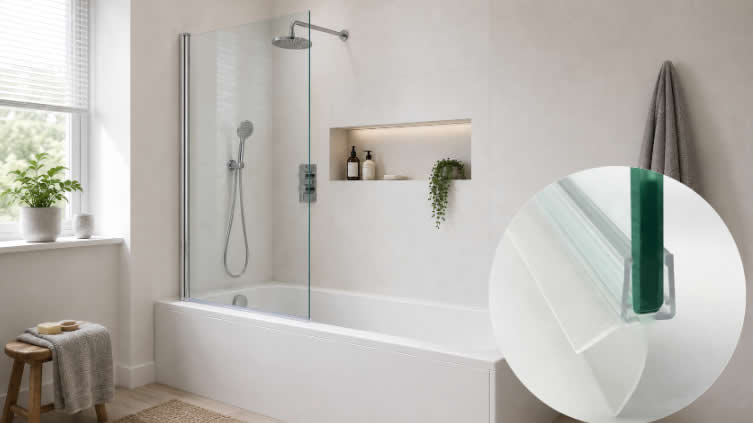
A shower door seal is usually fitted along the bottom or side of a glass shower door, or where two glass panels meet. It helps the door close properly and reduces the chance of water escaping through small gaps.
For tenants, it helps keep the bathroom easier to clean after daily use. For landlords, it can reduce maintenance issues, mould risk and possible disputes at the end of a tenancy.
Many UK rental bathrooms use glass shower doors or shower screens with 6mm, 8mm or 10mm glass. If the seal is the wrong size, it may look as if it fits, but it may not work well in daily use. Before looking for shower door seal replacement, it is worth checking the old seal’s position, glass thickness, gap size and shape, rather than buying a “universal” seal based only on a photo.
What Tenants Can Check
Tenants do not need tools to make a basic check. After a normal shower, take a minute to look around the door.
Check whether there are water marks along the edge. Look at the bottom seal and see if it has turned yellow, hard or cracked. Check whether the side seal is lifting away from the glass. If there is a magnetic strip, see whether it still closes properly. When the door is shut, look for any obvious gap between the glass panels.
These signs may seem minor, but they often show that the seal is wearing out. In many UK bathrooms, poor ventilation, hard water and regular moisture can slowly make a seal harder, discoloured and less effective.
It is also useful to take photos early in a tenancy. If the issue needs to be reported later, clear photos make the conversation with a landlord or property manager much easier.
Water on the Floor Is Not Always a Bottom Seal Problem
If water appears on the bathroom floor, it is easy to assume the bottom seal is the problem. That is not always the case.
Water may be escaping from the side of the door, the corner, the magnetic closing area, or the joint between the glass and the wall. It may then run down and collect on the floor.
A better approach is to check where the water first appears. If it runs down the side of the door, the side seal may not be fitting well. If it gathers near the closing edge, the magnetic strip or door gap may be the issue. If the wall corner stays damp, the silicone, tile joints or shower screen installation may also need checking.
For tenants, it helps to tell the landlord exactly where the water first appears: at the bottom, along the side, near the magnetic strip or close to the hinge. This is more useful than simply saying, “the bathroom is leaking.”
The Area Near the Bottom Hinge Is Easy to Miss
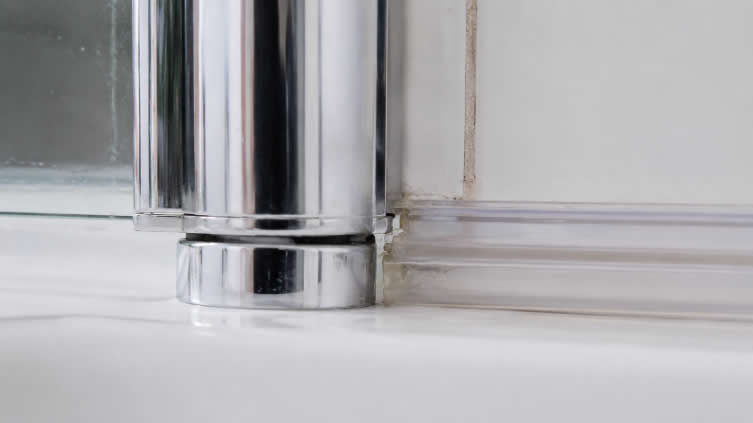
On shower screens, especially frameless or semi-frameless screens, one area is often overlooked: where the seal meets the bottom hinge area.
Water often runs down the glass, reaches the bottom seal, and then moves around tiny gaps near the corner or hinge. If this area is not properly covered, even a new bottom seal may not solve the problem.
Some specialist shower seal brands, such as Simba Seal, pay attention to this detail. A seal is not only about covering a straight glass edge. It also needs to match how water moves around the bottom of the glass, the corner and the hinge area.
That is why length is not the only measurement that matters. The seal shape, glass thickness, bottom gap and hinge structure all affect whether the replacement will work properly.
Clean It or Replace It?
Not every dirty seal needs replacing.
If the problem is surface limescale, soap residue or light mould marks, cleaning may be enough. A mild cleaner, soft cloth and old toothbrush can help around the edges. Good ventilation also helps the seal last longer.
But if the seal has become hard, cracked, misshapen or loose from the glass, cleaning will not fix the problem. If mould has worked into the material, or water marks keep returning after cleaning, the seal may no longer be doing its job.
In that case, replacement is usually the more sensible option.
Measure Before Replacing
One common mistake is measuring only the length of the old seal.
It is better to check where the seal is fitted first: bottom, side, magnetic edge or fixed screen edge. Then measure the glass thickness and confirm whether it is 6mm, 8mm or 10mm. After that, check the gap size and the profile shape of the old seal.
If the old seal is badly distorted, do not rely only on its current shape. Look at the shower door structure, the glass thickness and the fitting position. A “universal” shower seal is not always suitable for every door, especially with curved screens, frameless doors or unusual hinge positions.
Can Tenants Replace It Themselves?
Tenants can usually clean and check the seal themselves. But if parts need to be removed or replaced, it is better to check the tenancy agreement or contact the landlord or property manager first.
This is especially important in managed properties, student lets and shared houses. Tenants should avoid applying silicone, changing fittings or forcing replacement parts into place without permission.
A clear photo and a simple explanation are usually enough: where the seal is hard or loose, where the door no longer closes tightly, and where water first appears after a shower.
A Small Check That Can Save Trouble Later
A shower door seal is not the most expensive part of a bathroom, but it is one of the easiest to overlook. It rarely fails all at once. It usually becomes harder, looser and less effective over time.
For tenants, checking it when moving in and during regular cleaning can prevent confusion later. For landlords, checking the seal, corners and bottom hinge area is a simple maintenance habit.
Many bathroom issues start small. The useful thing is to notice them while they are still small.