
Surprising Facts About Central Europe’s Grand Old Capitals
Prague, Vienna and Budapest are often grouped together as Central Europe’s grand historic capitals, and it is easy to see why. Each has magnificent architecture, imposing palaces and a long connection with empires, artists and political change. Yet beneath the familiar photographs are plenty of details that make these cities more unusual than their grand boulevards and monumental buildings initially suggest. The three capitals are also remarkably easy to combine. Their proximity makes a multi-city trip practical, while travelling between them reveals how the landscape and architectural character gradually change.
Prague Has a House With a Dancing Name
Prague’s historic centre is filled with Gothic towers and Baroque buildings, but one of its most recognisable modern landmarks looks as though it is moving. The Dancing House, completed in the 1990s, was designed by architects Frank Gehry and Vlado Milunić and is sometimes nicknamed “Fred and Ginger” because of its curved forms. Its unusual appearance was a deliberate contrast to the surrounding historic architecture. Rather than trying to imitate Prague’s older buildings, the structure introduced an unmistakably contemporary silhouette beside the Vltava. It is a useful reminder that Prague’s architectural story did not end with its medieval and imperial monuments.
A journey on the Prague to Vienna train, for example, connects two cities that share elements of their imperial past but have developed distinctly different personalities.
The Astronomical Clock Is More Than a Clock
The Old Town Hall’s astronomical clock is one of Prague’s most photographed sights, but its mechanism has been operating for centuries. Installed in the early fifteenth century, it combines an astronomical dial, calendar elements and moving figures. Every hour, visitors gather in the square to watch the small procession of figures appear. The spectacle is brief, but the clock itself is far more interesting when examined closely. Its design reflects the medieval understanding of the heavens, time and the calendar, making it both an engineering achievement and a historical document.
Vienna Has a Palace Built for Summer
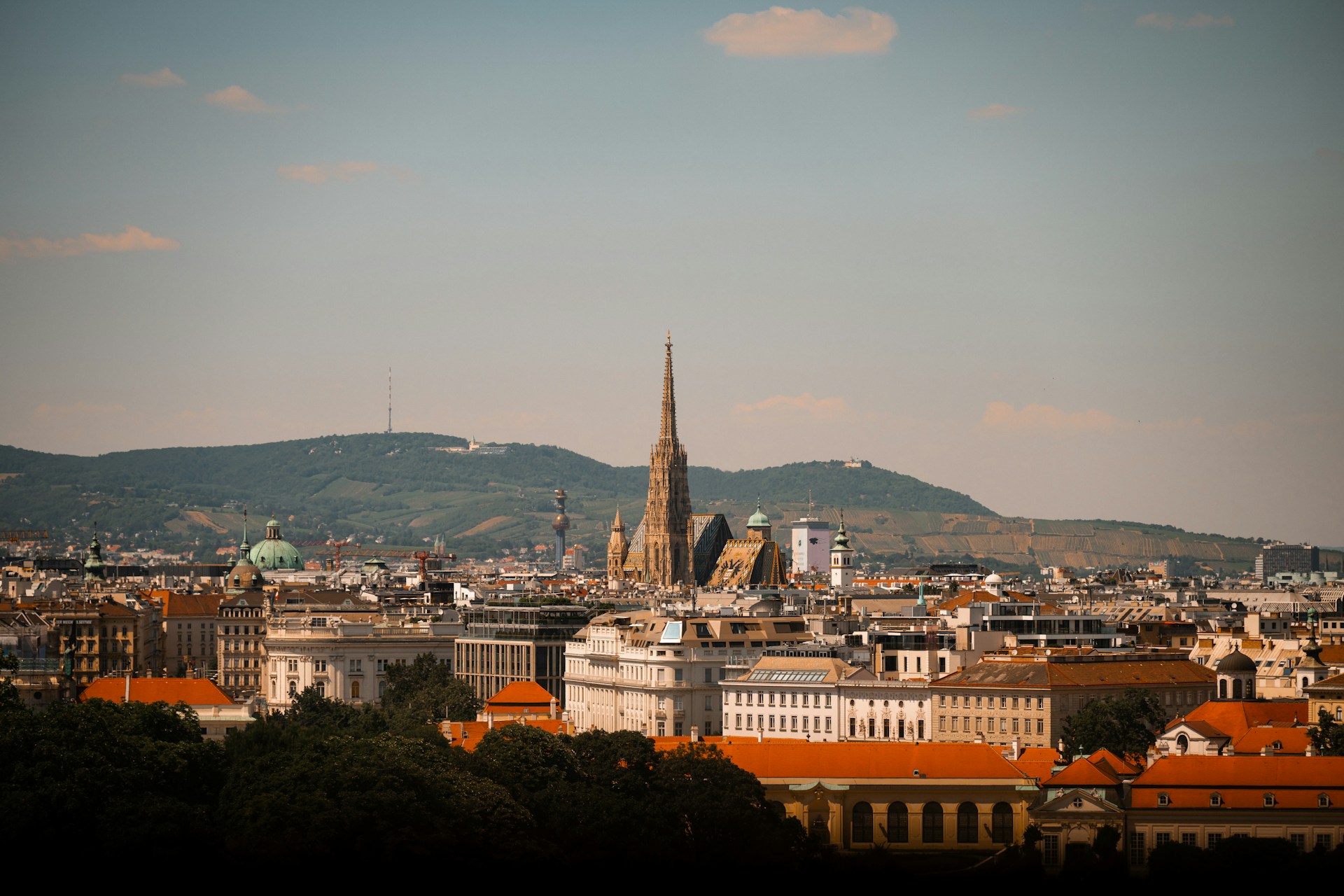
Vienna’s Schönbrunn Palace began as a hunting lodge before developing into the enormous imperial residence seen today. The complex eventually became closely associated with the Habsburg dynasty and contains hundreds of rooms, although only a selection is open to visitors. The gardens extend far beyond the main palace, climbing towards the Gloriette on the hill above. From there, visitors can look back across the grounds and towards Vienna. The scale of Schönbrunn helps explain how the Habsburg court shaped the city, but the palace also reveals how much of imperial life revolved around ceremony, leisure and carefully controlled appearances.
Coffeehouses Have a Long History in Vienna
Vienna’s coffeehouse tradition is not simply about finding somewhere comfortable to drink coffee. These establishments became important social and intellectual spaces where writers, journalists, artists and political figures could spend hours reading newspapers, meeting friends or working. The traditional Viennese coffeehouse developed its own rituals, from the presentation of coffee to the expectation that customers could linger. Today, historic cafés remain part of the city’s cultural identity, although contemporary coffee shops have added another layer to Vienna’s drinking culture.
A Train Journey Links Three Historic Capitals
The geography of the region makes it possible to create an itinerary around the three cities without relying on internal flights. Travelling from Vienna towards Budapest by rail is particularly straightforward, and the train from Vienna to Budapest follows the Danube corridor before reaching the Hungarian capital. Rail travel also provides a useful change of perspective. Instead of appearing as isolated destinations on a map, Prague, Vienna and Budapest begin to make sense as neighbouring capitals shaped by centuries of political, commercial and cultural connections. The relatively short distances between them make it tempting to combine all three in a single holiday.
The Danube Divides Budapest
Budapest’s identity is closely connected to the river running through its centre. Buda occupies the hilly western side, while Pest stretches across the flatter eastern bank. The two sides were historically separate settlements before officially becoming one city in 1873. The distinction remains visible today. Buda is associated with Castle Hill, winding streets and elevated viewpoints, while Pest contains much of the city’s commercial centre, including the Hungarian Parliament Building and grand nineteenth-century avenues. Crossing between the two sides gives visitors a useful sense of Budapest’s geography rather than simply viewing the river as a scenic backdrop.
Budapest Has a Vast Underground Network
Beneath the streets lies another piece of Budapest’s history. The city’s M1 metro line opened in 1896 and became the first underground railway on continental Europe. It was constructed to serve the city’s growing transport needs and to connect the centre with the City Park area. The small yellow trains and distinctive stations still make the line an interesting experience today. It may not look like a remarkable feat of engineering by modern standards, but its age gives it an unusual place in European transport history.
Prague Has a Castle Complex Larger Than Many Visitors Expect
Prague Castle is often described simply as a castle, but the complex is more like a collection of palaces, churches, courtyards and historic buildings spread across Castle Hill. St Vitus Cathedral dominates the skyline, while Golden Lane provides a much smaller and more intimate setting within the grounds. The castle has been an important seat of power for centuries. Kings of Bohemia, Holy Roman Emperors and later Czech leaders have all been associated with the site. Its history therefore extends well beyond the medieval period often associated with Prague’s old centre.
Vienna Has a Connection to Classical Music Everywhere You Look
Vienna’s association with composers such as Mozart, Beethoven and Schubert is impossible to miss, but the relationship between the city and classical music is more complicated than a simple collection of famous names. Concert halls, churches, aristocratic residences and public spaces all played roles in the development of the city’s musical culture. Visitors can encounter this heritage through museums, memorials and performances, but even the city’s streets contain reminders of its musical past. Some locations connected with famous composers have changed considerably over time, making it worthwhile to distinguish historical associations from the polished stories often presented to tourists.
Each Capital Has Its Own Relationship With the Past
Prague, Vienna and Budapest all preserve spectacular reminders of earlier centuries, but they do not present history in exactly the same way. Prague’s medieval centre remains remarkably cohesive, Vienna reflects the grandeur of the Habsburg era through palaces and monumental avenues, while Budapest combines nineteenth-century architecture with reminders of Ottoman, Austro-Hungarian and twentieth-century history. That mixture is what makes a journey through the three capitals so rewarding. Familiar landmarks provide the starting point, but smaller details often reveal more about how these cities evolved. A metro station, coffeehouse, riverside building or unusual modern structure can sometimes tell a more surprising story than the grandest monument.
Three Capitals, Countless Stories
Central Europe’s historic capitals have earned their reputations for beautiful architecture, but their appeal goes beyond impressive façades. Prague has centuries-old mechanisms and unexpected modern landmarks, Vienna retains traditions shaped by imperial life, and Budapest combines two historic halves around one of Europe’s great rivers. Seeing them together also puts their similarities and differences into perspective. They share a complicated regional history, yet each has developed a recognisable identity of its own. That makes a trip between the three much more than a tour of grand buildings. It becomes an opportunity to notice the small facts and overlooked details that give these famous capitals their character.